前言 可参考文档:
https://www.runoob.com/php/php-mysql-intro.html
本文使用的是PHP7.3版本。
面向对象/面向过程/PDO 最先有的是面向过程的方式,后来学习其他语言添加的面向对象,而PDO是面向对象方式对所有数据库的一种封装。
PDO是PHP数据对象,PHP Data Object的缩写。
统一API能操作各种数据库,这样切换数据库不用修改代码了。
MySQLi和PDO API是在MySQL 4.1版本之后引入的,因此只有MySQL 5.0及以上版本才支持这两种API。而PHP7对MySQLi和PDO API的支持是基于这两种API的实现的,因此只有MySQL 5.5及以上版本的API才能与PHP7兼容。
结论
推荐使用PDO。
PDO方式 查询列表 1 2 3 4 5 6 7 8 9 10 11 12 13 14 15 16 17 18 19 20 21 <?php $dbms = 'mysql' ; $host = 'localhost' ; $dbName = 'zdb' ; $user = 'root' ; $pass = 'root' ; $dsn = "$dbms:host=$host;dbname=$dbName" ; $userlist = array (); try { $dbh = new PDO($dsn, $user, $pass); foreach ($dbh->query('SELECT * from t_user limit 10' ) as $row) { array_push($userlist, $row); } $dbh = null ; } catch (PDOException $e) { die ("Error!: " . $e->getMessage() . "<br/>" ); } echo json_encode($userlist);?>
插入单条数据 1 2 3 4 5 6 7 8 9 10 11 12 13 14 15 16 17 18 19 20 <?php $dbms = 'mysql' ; $host = 'localhost' ; $dbName = 'zdb' ; $user = 'root' ; $pass = 'root' ; $dsn = "$dbms:host=$host;dbname=$dbName" ; try { $conn = new PDO($dsn, $user, $pass); $conn->setAttribute(PDO::ATTR_ERRMODE, PDO::ERRMODE_EXCEPTION); $sql = "INSERT INTO t_user (name, age) VALUES ('John', 15)" ; $conn->exec($sql); echo "新记录插入成功" ; } catch (PDOException $e) { echo $sql . "<br>" . $e->getMessage(); } $conn = null ; ?>
插入多条数据 1 2 3 4 5 6 7 8 9 10 11 12 13 14 15 16 17 18 19 20 21 22 23 24 25 26 27 28 29 <?php $servername = "localhost" ; $username = "root" ; $password = "root" ; $dbname = "zdb" ; try { $conn = new PDO("mysql:host=$servername;dbname=$dbname" , $username, $password); $conn->setAttribute(PDO::ATTR_ERRMODE, PDO::ERRMODE_EXCEPTION); $conn->beginTransaction(); $conn->exec("INSERT INTO t_user (name, age) VALUES ('John', 10);" ); $conn->exec("INSERT INTO t_user (name, age) VALUES ('Mary', 20);" ); $conn->exec("INSERT INTO t_user (name, age) VALUES ('Julie', 30)" ); $conn->commit(); echo "新记录插入成功" ; } catch (PDOException $e) { $conn->rollback(); echo $sql . "<br>" . $e->getMessage(); } $conn = null ; ?>
插入数据-预处理 1 2 3 4 5 6 7 8 9 10 11 12 13 14 15 16 17 18 19 20 21 22 23 24 25 26 27 28 29 30 31 32 33 34 35 <?php $servername = "localhost" ; $username = "root" ; $password = "root" ; $dbname = "zdb" ; try { $conn = new PDO("mysql:host=$servername;dbname=$dbname" , $username, $password); $conn->setAttribute(PDO::ATTR_ERRMODE, PDO::ERRMODE_EXCEPTION); $stmt = $conn->prepare("INSERT INTO t_user (name, age) VALUES (:name, :age)" ); $stmt->bindParam(':name' , $name); $stmt->bindParam(':age' , $age); $name = "John" ; $age = 12 ; $stmt->execute(); $name = "Mary" ; $age = 14 ; $stmt->execute(); $name = "Julie" ; $age = 21 ; $stmt->execute(); echo "新记录插入成功" ; } catch (PDOException $e) { echo "Error: " . $e->getMessage(); } $conn = null ; ?>
删除数据 1 2 3 4 5 6 7 8 9 10 11 12 13 14 15 16 17 18 19 20 21 <?php $dbms = 'mysql' ; $host = 'localhost' ; $dbName = 'zdb' ; $user = 'root' ; $pass = 'root' ; $dsn = "$dbms:host=$host;dbname=$dbName" ; try { $conn = new PDO($dsn, $user, $pass); $conn->setAttribute(PDO::ATTR_ERRMODE, PDO::ERRMODE_EXCEPTION); $id = 9 ; $sql = "DELETE FROM t_user where id=$id" ; $conn->exec($sql); echo "删除成功" ; } catch (PDOException $e) { echo $sql . "<br>" . $e->getMessage(); } $conn = null ; ?>
更新数据 1 2 3 4 5 6 7 8 9 10 11 12 13 14 15 16 17 18 19 20 21 <?php $dbms = 'mysql' ; $host = 'localhost' ; $dbName = 'zdb' ; $user = 'root' ; $pass = 'root' ; $dsn = "$dbms:host=$host;dbname=$dbName" ; try { $conn = new PDO($dsn, $user, $pass); $conn->setAttribute(PDO::ATTR_ERRMODE, PDO::ERRMODE_EXCEPTION); $id = 12 ; $sql = "update t_user set name='小明' where id=$id" ; $conn->exec($sql); echo "更新成功" ; } catch (PDOException $e) { echo $sql . "<br>" . $e->getMessage(); } $conn = null ; ?>
兼容MySQL8 mysql8默认php pdo无法连接问题
会报两个错误
错误1
PDO::__construct(): Server sent charset (255) unknown to the client. Please, report to the developers
错误2
PDO::__construct(): The server requested authentication method unknown to the client
错误1的原因是编码不支持
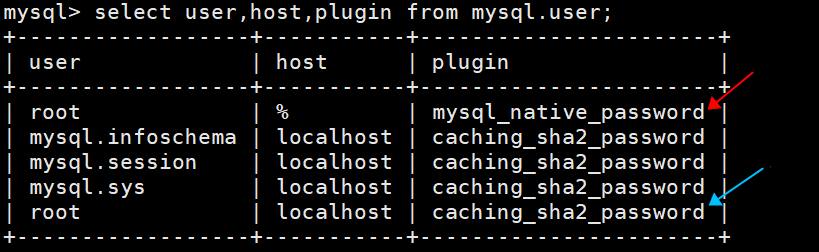
错误2的原因是mysql8默认的使用密码认证方式不一样
mysql8.0默认使用caching_sha2_password,但是之前版本都是使用mysql_native_password。
查询
1 select user ,host,plugin from mysql.user;
结果:
现在我们要改写mysql的默认密码认证方式。
改配置
/etc/mysql/my.cnf
1
2
3
4
5
6
7
8
9
10
[client] default-character-set=utf8 [mysql] default-character-set=utf8 [mysqld] default_authentication_plugin=mysql_native_password collation-server = utf8_unicode_ci character-set-server = utf8
重启mysql
改密码
1
2
ALTER USER 'root' @'%' IDENTIFIED WITH mysql_native_password BY'root' ; flush privileges;
重启mysql
面向对象方式 创建数据库 1 2 3 4 5 6 7 8 9 10 11 12 13 14 15 16 17 18 19 20 21 22 <?php $servername = "localhost" ; $username = "root" ; $password = "root" ; $conn = new mysqli($servername, $username, $password); if ($conn->connect_error) { die ("连接失败: " . $conn->connect_error); } $sql = "CREATE DATABASE zdb" ; if ($conn->query($sql) === TRUE ) { echo "数据库创建成功" ; } else { echo "Error creating database: " . $conn->error; } $conn->close(); ?>
创建表 1 2 3 4 5 6 7 8 9 10 11 12 13 14 15 16 17 18 19 20 21 22 23 24 25 26 27 28 29 <?php $servername = "localhost" ; $username = "root" ; $password = "root" ; $dbname = "zdb" ; $conn = new mysqli($servername, $username, $password, $dbname); if ($conn->connect_error) { die ("连接失败: " . $conn->connect_error); } $sql = "CREATE TABLE t_user2 ( id INT(6) UNSIGNED AUTO_INCREMENT PRIMARY KEY, name VARCHAR(30) NOT NULL, age INTEGER(30) NOT NULL, regdate TIMESTAMP )" ;if ($conn->query($sql) === TRUE ) { echo "创建表成功" ; } else { echo "创建数据表错误: " . $conn->error; } $conn->close(); ?>
查询列表 1 2 3 4 5 6 7 8 9 10 11 12 13 14 15 16 17 18 19 20 21 22 23 24 25 <?php $servername = "localhost" ; $username = "root" ; $password = "root" ; $dbname = "zdb" ; $conn = new mysqli($servername, $username, $password, $dbname); if ($conn->connect_error) { die ("连接失败: " . $conn->connect_error); } $sql = "SELECT id, name, age FROM t_user" ; $result = $conn->query($sql); $userlist = array (); if ($result->num_rows > 0 ) { while ($row = $result->fetch_assoc()) { array_push($userlist, $row); } } $conn->close(); echo json_encode($userlist);?>
插入单条数据 1 2 3 4 5 6 7 8 9 10 11 12 13 14 15 16 17 18 19 20 21 22 23 <?php $servername = "localhost" ; $username = "root" ; $password = "root" ; $dbname = "zdb" ; $conn = new mysqli($servername, $username, $password, $dbname); if ($conn->connect_error) { die ("连接失败: " . $conn->connect_error); } $sql = "INSERT INTO t_user (name, age) VALUES ('John', 33)" ; if ($conn->query($sql) === TRUE ) { echo "新记录插入成功" ; } else { echo "Error: " . $sql . "<br>" . $conn->error; } $conn->close(); ?>
插入多条数据 1 2 3 4 5 6 7 8 9 10 11 12 13 14 15 16 17 18 19 20 21 22 23 24 25 <?php $servername = "localhost" ; $username = "root" ; $password = "root" ; $dbname = "zdb" ; $conn = new mysqli($servername, $username, $password, $dbname); if ($conn->connect_error) { die ("连接失败: " . $conn->connect_error); } $sql = "INSERT INTO t_user (name, age) VALUES ('John', 10);" ; $sql .= "INSERT INTO t_user (name, age) VALUES ('Mary', 20);" ; $sql .= "INSERT INTO t_user (name, age) VALUES ('Julie', 30)" ; if ($conn->multi_query($sql) === TRUE ) { echo "新记录插入成功" ; } else { echo "Error: " . $sql . "<br>" . $conn->error; } $conn->close(); ?>
插入数据-预处理 1 2 3 4 5 6 7 8 9 10 11 12 13 14 15 16 17 18 19 20 21 22 23 24 25 26 27 28 29 30 31 32 33 34 35 36 <?php $servername = "localhost" ; $username = "root" ; $password = "root" ; $dbname = "zdb" ; $conn = new mysqli($servername, $username, $password, $dbname); if ($conn->connect_error) { die ("连接失败: " . $conn->connect_error); } $stmt = $conn->prepare("INSERT INTO t_user (name, age) VALUES (?, ?)" ); $stmt->bind_param("si" , $name, $age); $name = "John" ; $age = 12 ; $stmt->execute(); $name = "Mary" ; $age = 14 ; $stmt->execute(); $name = "Julie" ; $age = 21 ; $stmt->execute(); echo "新记录插入成功" ;$stmt->close(); $conn->close(); ?>
接下来,让我们来看下 bind_param() 函数:
1 $stmt->bind_param("si" , $name, $age);
该函数绑定了 SQL 的参数,且告诉数据库参数的值。 "si" 参数列处理其余参数的数据类型。s 字符告诉数据库该参数为字符串。
参数有以下四种类型:
i - integer(整型)
d - double(双精度浮点型)
s - string(字符串)
b - BLOB(binary large object:二进制大对象)
每个参数都需要指定类型。
删除数据 1 2 3 4 5 6 7 8 9 10 11 12 13 14 15 16 17 18 19 20 21 22 23 24 <?php $servername = "localhost" ; $username = "root" ; $password = "root" ; $dbname = "zdb" ; $conn = new mysqli($servername, $username, $password, $dbname); if ($conn->connect_error) { die ("连接失败: " . $conn->connect_error); } $id = 9 ; $sql = "DELETE FROM t_user where id=$id" ; if ($conn->query($sql)) { echo "删除成功" ; } else { echo "Error: " . $sql . "<br>" . $conn->error; } $conn->close(); ?>
更新数据 1 2 3 4 5 6 7 8 9 10 11 12 13 14 15 16 17 18 19 20 21 22 23 24 <?php $servername = "localhost" ; $username = "root" ; $password = "root" ; $dbname = "zdb" ; $conn = new mysqli($servername, $username, $password, $dbname); if ($conn->connect_error) { die ("连接失败: " . $conn->connect_error); } $id = 12 ; $sql = "update t_user set name='小明' where id=$id" ; if ($conn->query($sql)) { echo "更新成功" ; } else { echo "Error: " . $sql . "<br>" . $conn->error; } $conn->close(); ?>
面向过程 查询列表 1 2 3 4 5 6 7 8 9 10 11 12 13 14 15 16 17 18 19 20 21 22 23 24 25 <?php $link = mysqli_connect('127.0.0.1:3306' , 'root' , 'root' ); if (!$link) { exit ('连接数据库失败' ); } mysqli_set_charset($link, 'utf8' ); mysqli_select_db($link, 'zdb' ); $sql = "select * from t_user" ; $res = mysqli_query($link, $sql); $userlist = array (); while ($result = mysqli_fetch_assoc($res)) { array_push($userlist, $result); } mysqli_close($link); echo json_encode($userlist);?>